What follows is a review essay I once submitted to a scholarly journal, where it ultimately languished in the slush pile. Since I no longer have access to the academic email under which I sent it—and since it’s been three years—I think it’s safe to assume they won’t be accepting it now. Still, I would like to share it, as it touches on my deep love for Morrison’s A Mercy and showcases my admiration for Caison’s Red States: Indigeneity, Settler Colonialism, and Southern Studies and Armillas-Tiseyra’s The Dictator Novel: Writers and Politics in the Global South.
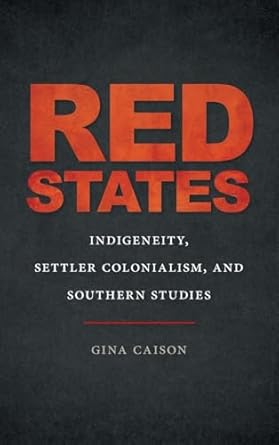
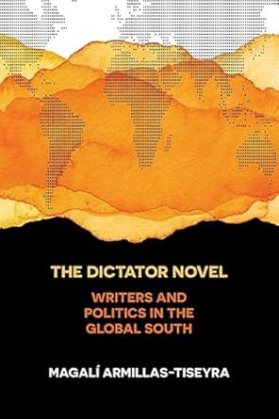
Toni Morrison, as both a novelist and a theorist, often anticipated conversations; her 2008 A Mercy exemplifies this trend. Set in the American colonies of late 17th century, it follows the inhabitants of a small northern homestead established and run by farmer-turned-trader, financier, and plantation owner Jacob Vaark. Vaark serves as a template to explain America’s mythohistory of Northern innocence and Southern guilt regarding chattel slavery through his persistent positioning of his Northern estate against his own construction and abjection of a Catholic-controlled Southern colony. As such, A Mercy depicts a budding North/South constructional divide in the early colonies, territories that were often redistributed and redefined. It further pushes back against the idea of The South as birthed a century later during the U.S. nationalization project—Southern Studies’ agreed-up epoch moment of the U.S. South’s creation.[1] Morrison thus suggests not only the U.S. South’s porous boundaries, a now well-established fact, but also a longer project of Southern exceptionalism. Morrison’s work precedes two recent critical texts that not only treat The Global South and the U.S. South as intersecting and simultaneously overlapping and distinct regions, but that also unpack reverberations of events or themes to question periodization and recognized epoch-making events: Gina Caison’s Red States: Indigeneity, Settler Colonialism, and Southern Studies (2018) and Magalí Armillas-Tiseyra’s The Dictator Novel: Writers and Politics in the Global South (2019), both of which consider deep time to negotiate legacies of colonialism.
Gina Caison’s Red States, part of University of Georgia Press’s New Southern Studies series, seeks to bridge the chasm between Southern Studies and Indigenous Studies using Indigenous theory to (re)read Southern Literature. Taking the concept of spiralic Indigenous temporalities as a heuristic, Caison reinscribes the concept of a red state in such a manner as to decenter the U.S. South’s focus on loss as it pertains to the Civil War and Lost Cause rhetoric. Spiralic time is an alternate temporal structure that resists colonial temporal paradigms such that reading deep time using spiralic time challenges the temporality of a progress narrative as “the past-future is contained in the present” (Cusicanqui 96). Caison notes that spiralic time is a concept found in numerous Indigenous traditions not only in the U.S. Southeast, but also in the greater Gulf South, from the Caribbean to Central America (23). As a method, it allows Caison “to see recurrences that might not be as readily obvious with traditional literary periodization” and to forefront a much occluded and continuous Native presence in the U.S. South (Caison 14). In other words, it is a heuristic that allows her to reassociate the land with its Indigenous past, present, and future and to dethrone the Civil War as an epoch-making moment while centering The Removal.
Caison’s first two chapters of Red States (“Recovery” and “Revolution”) consider texts from non-Native authors to demonstrate the necessity of reading for patterns or reverberations in events over traditional epoch-making events to understand dispossession rhetoric in the U.S. South. Chapter one details how, beginning with Roanoke, the U.S. South has trafficked in intersecting narratives of loss and archival absences—narrative modes that predate the Confederate Lost Cause and which are bound up with the desire to reassert non-Native land claims. Likewise, these narratives are built on Indigenous loss and archival absences as, “the power to control the absented body or item [through narrative control]… ultimately justifies [Indigenous] dispossession” (Caison 34). This narrative structure of loss, already presupposed as non-native loss prior to the Civil War, became readily available for the Confederate’s use for their Lost Cause. Further showing how these trends reverberate across time, this chapter reads Paul Green’s outdoor drama The Lost Colony (1937), restaged annually in North Carolina, as a text that legitimizes settler-colonial land claims through its production. Caison finds it both traffics in the affective register of the Confederate Lost Cause (a nineteenth century reverberation of the loss narrative) as well as restages earlier settler narratives of loss (again already built on Native loss). Chapter two takes up analysis of narratives of the American Revolution, a historical moment that likewise reverberates through later U.S. South narratives to shore-up non-native land claims. Caison traces this movement through Thomas Jefferson’s public and personal texts, William Gilmore Simm’s Revolution romance Mellichampe (1836), and Kermit Hunter’s outdoor drama Horn in the West (1952).
As Red State’s chapters three through five demonstrate by shifting focus toward Native-authored texts, The Removal hardly removed the Native presence from the U.S. South; rather, productive new meanings may be read from the region when centering the Native South, such as reassigning the Native South as the primary meaning of “red state” over its contemporary political connotations. Through this move, Caison seeks a definition of “red state” that is “useful to understand the way that land claim and narrative order work to forward issues of settler colonialism in the region” (Caison 21). Chapter three (“Removal”) analyzes how the plantationocene,[2] between Removal and the Civil War, worked to construct narratives about the U.S. South’s Indigenous. Discussion of Blake Hausman’s speculative Riding the Trail of Tears (2011) demonstrates how non-native consumption of Removal narratives can be complicated by Native literature. Chapter four (“Resistance”) engages with histories of resistance and historical narratives of the Lumbee Tribe of North Carolina. Native-staged outdoor dramas, such as Strike at the Wind!, speak back to “more frequently mythologized narratives of national belonging” and demonstrate resistance to both federal and state-based policies meant to “abrogate the sovereignty of Indigenous people,” (Caison 193). It is worth noting that Caison discusses the tribe’s claims to federal recognition and the intricate constellation of sovereign Native interactions between tribes but fails to account for the campaign by some federally recognized tribes against the Lumbee tribe’s recognition—a detail that would complicate her reading of Native resistance in the Red States. Chapter five (“Resilience”) centers contemporary Native-authored texts that confront these narratives of loss by imagining indigenous futures through the use of spiralic temporalities. Through her reading of Linda Hogan’s Power (1998), Janet McAdams’s Red Weather (2012), and the 2012 documentary My Louisiana Love, the red state becomes a Native-centric space that “recast[s] the idea of apocalypse within an Indigenous worldview where creation and destruction are not mutually exclusive categories” (Caison 216). Spiralic time, Caison demonstrates, allows these authors to simultaneously recover previous moments of survival and move forward; inhabiting these modes of indigenous temporalities becomes a form of resilience.
While not explicitly using spiralic time as a heuristic, The Dictator Novel, published by Northwestern University Press with support by the American Comparative Literature Association, traces the genre’s origin in Latin America and Africa, as well as the trans-Atlantic interactions between them, to understand how the dictator genre’s distinctive traits reverberate and revolve over time through each continent’s unique generic traditions and socio-political histories. For Armillas-Tiseyra, it is important to consider how genres are always in flux, “subject to local variation (across space) and large-scale transformation over time” so that the genre of the dictator novel “is an open-ended system that continually incorporates new materials, transforming these and itself in the process” (40; 42). Likewise, although she notes that periodization may be one useful heuristic, it is not definitive; it is impossible and irresponsible to argue for a clear, linear transformation of the genre from its early antecedents at the turn of the century to our contemporary moment, nor is it possible to show a clear heritage of the dictator novel from Latin America to Africa. Rather, like Caison’s use of spiralic time as a heuristic, Armillas-Tiseyra moves through time and space cautiously, demonstrating how patterns reverberate and revolve through their contemporary moments and spaces. Such methodology locates and ballasts transnational “interconnections that are part of the cultural logic of decolonization” while still exploring how dictatorship in the postcolony is “an expression of the hierarchical and taxonomic logic of late capitalism” (Armillas-Tiseyra 44).
Armillas-Tiseyra thus begins chapter one by defining a “constellation of critical concerns” and generic features of the dictator novel (25). Of paramount importance is its formulaic experimentation that refuses the predictable patterns of literatures of the colonizers. Here Armillas-Tiseyra builds off postcolonial theories (and theories taken up by postcolonial studies) by authors and scholars such as Frantz Fanon, Theodore Adorno, Julio Cortázar, Gabriel García Márquez, Édouard Glissant, Ngũgĩwa Thiong’o, Cinweizu Ibekwe, Onwuchekwa Jemie, and Ichechukwu Madubuike to argue that “commitment” and “committed literature” (work that intervenes or calls for social or political intervention) demands a broad accessibility or legibility for their mass audience as well as pertinence to their lived experiences. The dictator novel invites critical considerations that move past current realities to future political and cultural possibilities—the “democracy to come” (Armillas-Tiseyra 35). And, like the Indigenous Literature discussed by Caison, dictator novels “register experiences that are elided in the official record” as well as the “unfinished business of decolonialization” (Armillas-Tiseyra 3; 13). She argues that such works must necessarily innovate the forms and languages of literature. Moreover, although dictator novels share an opposition to dictatorship by paying attention to the harmful mechanics of authoritarian power structures, through their focalization or other experimentations in form, dictator novels move beyond the mission of an anti-dictator project. These novels rely on the trope of vulgarity for a dictator as an anti-dictator text might, but they also implicate the foreign economic and political powers that undergird and profit from dictatorship in the postcolony. In other words, these works do not simply explore life under the dictator but seek to understand the phenomenon of dictatorship itself.
Chapters two and three of The Dictator Novel consider the genre’s formation in Latin America, beginning with the appearance of the literary dictator character. In chapter two, Armillas-Tiseyra discusses how Argentina’s Generation of 1837, a collection of committed writers, inscribed dictator Juan Manuel de Rosas into early anti-dictator works, focusing largely on Domingo Faustino Sarmiento’s Facundo o civilización y barbarie en las pampas argentinas (1845). For political context, she also discusses pro-Rosas literatures and the emerging poetry genre gauchesca, mobilized by both pro- and anti-Rosas writers. While not yet fully defined as a genre, the dictator novel’s first revolution is mapped as it emerges in the nineteenth century. Chapter three reviews how engagement with the dictator figure in twentieth century Latin American dictator novels invites evaluation beyond historical referentiality—that is, the novels she discusses, Gabriel García Márquez’s El otoño del patriarca (1974), Alejo Carpentier’s El recurso del método (1974), and Augusto Roa Bastos’s Yo el Supremo (1974), move from turning history into literature toward posing theoretical questions. Narrative strategies such as remaking or inventing histories and focalization through the dictator figure (one mechanism by which the reader, through the transformative consumption of the novel, must confront their own complicity with these systems) trouble the larger foundations engendering and maintaining dictatorship in Latin America.
In its final two chapters, The Dictator Novel considers the African dictator novel following West and Central African independences in the second half of the twentieth century. In chapter four Armillas-Tiseyra argues that while there is a relationship to the Latin American dictator novel, African writers such as Aminata Sow Fall, Henri Lopès, and Sony Labou Tansi repurpose the dictator figure, creating their own constellation of generic conventions. Moreover, the work of Ousmane Sembène and Chinua Achebe serve as early case studies to demonstrate how the genre begins to move beyond critiquing the figure of the dictator during a period of disillusionment so that it complicates committed writing. Ultimately, in chapter five, Armillas-Tiseyra finds that as the dictator novel reverberates and morphs, cycling through variations of commitment, in Africa it becomes “increasingly irrelevant to the operations of global systems of oppression,” subsumed by “imperial corporonialism”—late-stage neoliberal capitalism that functions as a modern form of colonialism (Armillas-Tiseyra 170). Further, this new critical transformation of the dictator novel, a reformed commitment, calls for transnational collaboration to upend corporonialism. This compelling reading invites further exploration of similarities in commitment trends across genres in the “imperial corporonialism” of the contemporary Global South.
The use of spiralic time as a heuristic in Red States asks us to examine our epoch-making events in Southern Studies and to reconsider the purposes such urges toward periodization serve—the whom and what they serve. Caison finds that the Civil War allows Lost Cause literature and rhetoric to forward one South over other possible Souths, including the Native South, which leads me to wonder how such a reading might expand research on the dictator novel and other investigations in Southern Studies. What might be gleaned by reading the experiments and innovations in the dictator novel, as seen by Armillas-Tiseyra to be largely reactions to imperialist literature structures, using deep time? Perhaps most importantly, paraphrasing and broadening Caison’s question to Southern Studies, what happens to our concept of postcolonial regions when we acknowledge that they have been built on “fantasies of settler time” (Caison 24)? To me, these questions suggest that foregrounding deep and non-linear temporalities in our readings—a methodology that would require looking past Western linear time, maybe even to reconstructions of the archive such as Morrison’s A Mercy—would, like Caison’s Red States, constructively challenge long-held epochs in Southern Studies.
Works Cited
Armillas-Tiseyra, Magalí. The Dictator Novel: Writers and Politics in the Global South. Northwestern University Press, 2019.
Caison, Gina. Red States: Indigeneity, Settler Colonialism, and Southern Studies. Athens: University of Georgia Press, 2018.
Cusicanqui, Silvia Rivera. “Ch’ixinakax utxiwa: A Reflection on the Practices and Discourses of Colonialization.” The South Atlantic Quarterly, vol. 111, no. 1, 2012, pp. 95-109.
Greeson, Jennifer Rae. Our South: Geographic Fantasy and the Rise of National Literature. Cambridge: Harvard University Press, 2010.
Morrison, Toni. A Mercy. New York: Vintage, 2009.
[1] See Jennifer Rae Greeson’s Our South: Geographic Fantasy and the Rise of National Literature (Cambridge: Harvard University Press, 2010): this project is itself a reinscribing of the once-held belief that The South was created during the events leading up to the U.S. Civil War by reading reverberations of othering of the South earlier in the Nation’s history.
[2] The plantationocene is an alternative naming of our epoch that centers the plantation apparatus to simultaneously interrogate its past and afterlife, including its materialities and ecological, economic, social, and political impacts. It positions the plantation, along with its colonialist, imperialist, and capitalist drives, as a transformational moment in human and natural history whereas the commonly proposed geological epoch “Anthropocene” more loosely describes the period in which human activity has been the dominate influence on environmental and climatic change.
 Rhiannon Thorne